about SPIA...

_________________

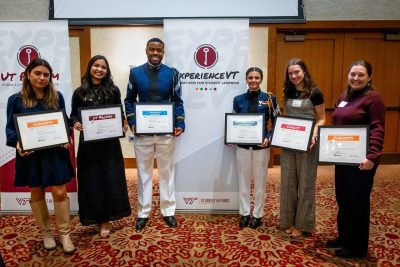
SPIA Awards Reception
Monday, April 20, 7-9:00pm
Thomas Conner House
104 Draper Road

List of Recipients...

___________

SPIA Speakers Series...

Community Trauma in the Context of the Current Economic Crisis

Ridenour Fellow

Mindy Fullilove

Mindy Thompson Fullilove, M.D.
Research Psychiatrist at New York State Psychiatric Institute and
Professor of Clinical Psychiatry and Public Health at Columbia University

More information...

Lecture:
5:00pm, Thursday, April 30
in Holden Auditorium


Staff and graduates seminar: 11a-1:00p, Friday, May 1
in Squires, Brush Mountain B


Gerry Kearns

Gerry Kearns

 
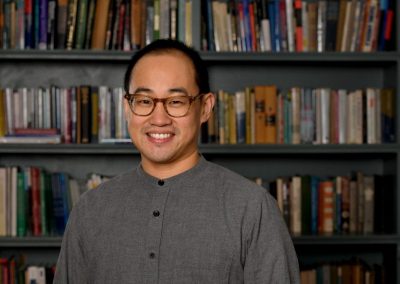
It is my delight to introduce the new Director of the School of Public and International Affairs, Dr. Gerry Kearns. Dr. Kearns comes to Virginia Tech from Cambridge University where he held the position of senior lecturer. I’ll let Gerry introduce himself (below), but suffice to say he has engaged in a wide range of interdisciplinary research and teaching with a strong spatial orientation given his geography background, and he is well prepared and brings new energy to lead SPIA’s interdisciplinary programs.

I have had the great pleasure of directing SPIA in its first five years. During that time, the School has matured and grown. We have garnered significant university resources to develop graduate programs at our Alexandria campus in the National Capital Region and the MPA in Richmond. We have established procedures, policies and guidelines for promotion and tenure. We have added a large number of excellent faculty in five years, and enrollment now approaches 500 students.  The research and scholarship of our faculty continues to be very strong and is the basis for our growing excellence and reputation of our programs. Our MPA and MURP programs rank in the top 10% nationally.

Still, it is time for new leadership and ideas to move the School to its next level. And we are fortunate indeed to have attracted Gerry Kearns to this position. I look forward to working with him and other SPIA faculty as we move the School forward.

Best wishes,
John Randolph

___________________________________

"This is an exciting time to be in SPIA. I see from CAUS [College of Architecture and Urban Studies] Annual Report 2007-2008 that we were responsible for about half the graduate degrees awarded by the College including three out of every four PhDs. I note also that SPIA comprised a good share of the CAUS faculty supported by the University’s interdisciplinary Institute for Society, Culture and Environment [Heike Mayer, Kris Wernstedt, Patrick Roberts, Matthew Dull]. I note that among the research highlighted by the report are works by Paul Knox of urban ‘schlock’, Robert Lang on the notion of megapolitan growth, and Gerard Toal for a career award from the Association of American Geographers. Among the eight faculty of the College highlighted for research that engaged with issues of equity and diversity we find our own Casey Dawkins, Wilma Dunaway, Heike Mayer, Jesse Richardson, and Giselle Datz. I see also from the report that Diane Zahm was honored for her Teaching Excellence and that Diane dominates the part of the College report on ‘Service learning projects’.

Of course, this visibility within the CAUS Annual report is only one sign of the healthy state of the School. I spent Saturday reading the edited collection, There is a gunman on campus: tragedy and terror at Virginia Tech. Tim Luke is both a co-editor and contributor to the volume. Another contributor to the volume is Patricia Mooney Nickel who formerly taught in SPIA. This book is an important piece of public-service work. Of course, I cannot have any true sense of the horrific experiences that faculty shared at the time of and after the shootings of 16 April 2007 but the book gave me an inkling of some of the ways some people have been reflecting upon what happened.

I look forward to reading Wilma Dunaway’s book on Women, work and family in the antebellum South, Paul Knox's Metroburbia, USA and John Randolph’s Energy for Sustainability: Technology, Planning, Policy. I have been looking at some other publications by faculty as I prepare for meeting with them but we are so productive it is a real (and fun) challenge to keep abreast of our work.

Oh, and did I mention that we have a whole raft of new faculty? In CPAP, Sang Ok Choi joins us from California State University, Dominguez Hills. He is an expert in the study of emergency management and has worked on fire and emergency services in Florida. Which links well to the work of Yang Zhang who joins UAP from the University of Illinois at Springfield where he was Director of the Center for Geographic Information Systems. His work has also taken him to Florida and he has undertaken a long-term panel-data survey of economic recovery after Hurricane Andrew. Environmental issues are likewise at the heart of the scholarship of Ralph Hall who comes to UAP from Stanford. He is interested in questions of sustainability, which he has explored in connection with transportation although his current research is taking into the fields of water supply and sanitation. Environmental regulation and waste disposal feature also in the research of Brian Cook who comes to CPAP from Clark University. Brian has published three books of which the latest is Democracy and Administration: Woodrow Wilson’s ideas and the challenge of public management (Johns Hopkins University Press, 2007). On the other hand, transportation has been central to Ralph Buehler’s work. Ralph comes to UAP from Rutger’s and his work on cycling is resolutely comparative between Europe and North America. He has also been interested in the relations between the spatial form of cities and the challenges of transportation planning. This concern with the form of cities is echoed also in the work of Karen Danielsen who recently finished her PhD at Virginia Tech on gated communities. Karen brings to UAP a concern with the management of urban growth including, as with Yang and Sang, an interest in Florida. The questions of urban space have also been central to the work of Karen Till who comes to UAP and GIA from the Twin Cities campus of the University of Minnesota. Karen has published on the New Urbanism and also on issues of art and public memory, notably in her book The New Berlin: Memory, Politics, Place (University of Minnesota Press, 2005) and in more recent studies of “wounded cities” such as Cape Town. I also have my roots in urban geography having edited two collections [Urbanising Britain: essays on class, community and space, Cambridge University Press 1991; Selling Places: the city as cultural capital past and present, Pergamon 1993]. My recent publications have been on geopolitics, AIDS, and postcolonial theory. Postcolonial theory is taken up in her own research by Rupa Thadhani, who comes to GIA and ASPECT [an interdisciplinary program on campus: Alliance for Social, Political, Ethical, and Cultural Thought] from Virginia Commonwealth University at Richmond. Rupa’s research on the Patriot Act draws upon feminist and post-structuralist perspectives and in a recent article she challenged scholars to imagine a postcolonial public administration.
 
SPIA is very fortunate to have attracted such a talented pool of scholars to add to established strengths. I hope I can involve myself in our efforts to explicate to each other the many research enthusiasms we share."
 
Gerry Kearns


If you have any comments, please contact our webmaster. Thank you.


©2005 School of Public & International Affairs


link to CPAPlink to GIAlink to UAP CAUS Home